Dawn Group Co. , Ltd
中文 | English Dawn Share [ 002838 ]


On August 25, Dawn Group and Wuhan Huimo Technology Co., Ltd. (hereinafter referred to as "Wuhan Huimo") signed an agreement at Dawn Group's headquarters for a wire-drawing graphite emulsion project. This partnership marks a strategic move by Dawn Group into the field of new inorganic materials and serves as a vivid example of the "university R&D—enterprise engineering application—deep industrial integration" collaborative innovation model. It will accelerate the practical application of cutting-edge scientific achievements and inject the momentum of "new quality productive forces" into industrial upgrading. Officials from the Longkou Economic Development Zone (Longgang Subdistrict), teams from both partnering companies, and invited guests attended the event.
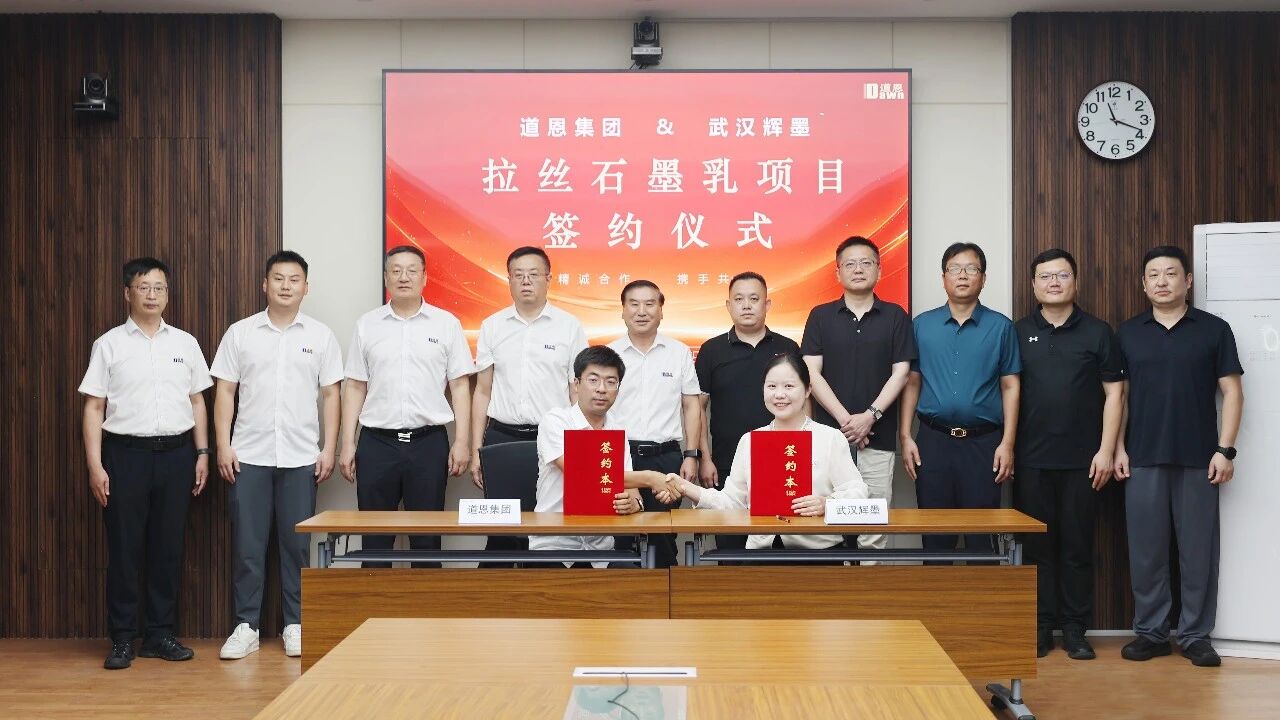
Graphite emulsion is a critical lubricant indispensable to high-end manufacturing, finding wide application in strategic sectors such as refractory metal wire drawing, precision forging, and the nuclear industry. For a long time, the core production technology was monopolized by foreign companies, creating a "chokepoint" that constrained the development of Chinese new materials industry chain. Song Huidong, Vice President of Dawn Group, noted during the signing ceremony that Wuhan Huimo—in collaboration with top research teams from Huazhong University of Science and Technology and Wuhan Institute of Technology—had achieved breakthroughs in key areas such as ultrafine graphite dispersion and high-temperature film formation. Some of these core processes involve trade secrets that are not disclosed in patents, thereby establishing a unique technological "moat" for the company.
Under the cooperation agreement, the two parties will establish a joint venture—Shandong Dawn Huimo Technology Co., Ltd.—at the Dawn New Material Technology Industrial Park in Longkou City. Leveraging the comprehensive utility infrastructure of Dawn’s Longkou base, the project’s first phase involves constructing the first large-scale production line for wire-drawing graphite emulsion. Initial efforts will focus on product validation and market introduction for key clients in sectors such as photovoltaic diamond wire and specialty alloy wire. Production capacity will be expanded in stages based on market demand, gradually extending into emerging application areas like glass mold coatings and electronic pastes, thereby continuously driving momentum for industrial transformation.
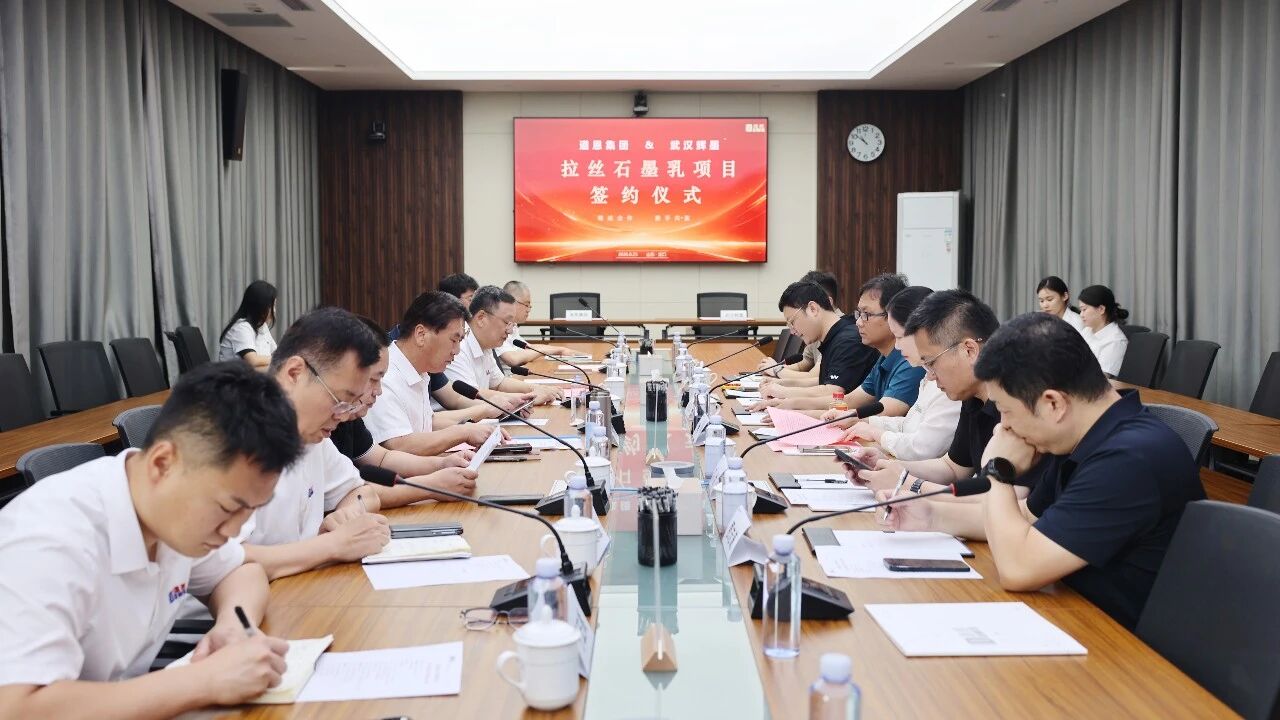
"This collaboration represents a profound alignment of scientific research aspirations and industrial mission," stated Professor Xiao Fei of Huazhong University of Science and Technology, the technical lead at Wuhan Huimo. Often hailed as the "king of new materials," novel carbon materials offer vast application potential across strategic emerging sectors such as new energy, biomedicine, and high-end manufacturing. Leveraging the university's research platforms and talent pool, and combining them with Dawn Group’s comprehensive industrial chain capabilities, the team will dedicate itself to overcoming key technical challenges in the engineering and industrialization of carbon-based composite materials, while steadfastly pursuing the strategic goal of domestic substitution for graphite emulsions.
This powerful alliance between an industrial leader and a vanguard of technological innovation serves as a significant model for addressing gaps in the new materials supply chain and fostering industrial autonomy and control. Yu Xiaoning, Chairman and President of Dawn Group, stated that both parties must prioritize technological innovation, continuously refine and optimize formulations and production processes, and—building upon their established presence in mainstream coarse and fine filament products—make strategic breakthroughs into high-barrier applications such as ultrafine filaments. By narrowing the technological gap with top-tier international products, breaking the long-standing monopoly held by overseas brands in the high-end wire-drawing lubricant sector, and providing localized material solutions, the partnership aims to solidify the foundation for an autonomous and controllable industrial chain.