Dawn Group Co. , Ltd
中文 | English Dawn Share [ 002838 ]


On July 8th, the *CCTV Finance* program "Shandong Observation" spotlighted Longkou, Shandong, in a report titled "[On-the-Ground Research] How Did a Small City Become the Champion of County-Level Growth in Northern China?" and commended the story of Dawn Polymer's technological innovation.
It is common knowledge that economic growth can bring vitality.
However, while reporting from Longkou, Shandong, the journalist discovered that this logic was actually reversed: it was not growth that generated vitality, but rather vitality that drove growth. Last year, this small coastal city saw its GDP grow by 14% to exceed 190 billion yuan, making it the growth leader among counties in northern China. Even more significant is the fact that the private sector accounted for over 90% of this figure. How exactly was this "reversed dynamic"—where vitality fuels growth—achieved?
Longkou City lies far from major metropolitan areas in Shandong—such as Jinan, Qingdao, and Yantai. As a county-level city seeking to develop its private sector, it faces a primary challenge: a shortage of talent. How, then, can this talent gap be addressed?
While interviewing at a local private enterprise, the reporter arrived just as a new material for automotive tires—developed in-house—was poised for mass production, marking a significant technological innovation in the global tire industry.
CMG reporter Song Jianchun: "The new material I’m holding here has exceptional airtightness. Take a standard balloon, for example: once inflated and sealed, it typically loses air after about a week. However, lab technicians tell me that a balloon made from this new material will not deflate even after six months."
Thanks to its excellent airtightness, this new material can be used in automotive tires to significantly reduce their weight, lower rolling resistance, and decrease fuel consumption. Previously, a major international chemical company had developed a similar material but failed to successfully bring it to market. Under the coordination of the Shandong Provincial Department of Science and Technology, the local R&D team collaborated with university experts and tire manufacturers to overcome this industry-wide challenge.
Reporter: "So, this is the tire that uses the new material, right?"
Tian Hongchi, General Manager and Chief Scientist of Shandong Dawn Polymer Co., Ltd.: "Yes."
Reporter: "Let's look at the weight—it's a bit lighter than a conventional tire."
Tian Hongchi: "One kilogram lighter."
At this enterprise-based national technological innovation center, a breakthrough was also achieved with the country's first highly realistic robotic skin; it enables robots to display emotional reactions—such as blushing—just like humans.
Tian Hongchi: "Take this robot, for example: if shake hands like we are doing now, it feels happy, and its face takes on a smiling hue. But if it gets hit—say, someone strikes it like this—it gets angry, and its face and neck flush red."
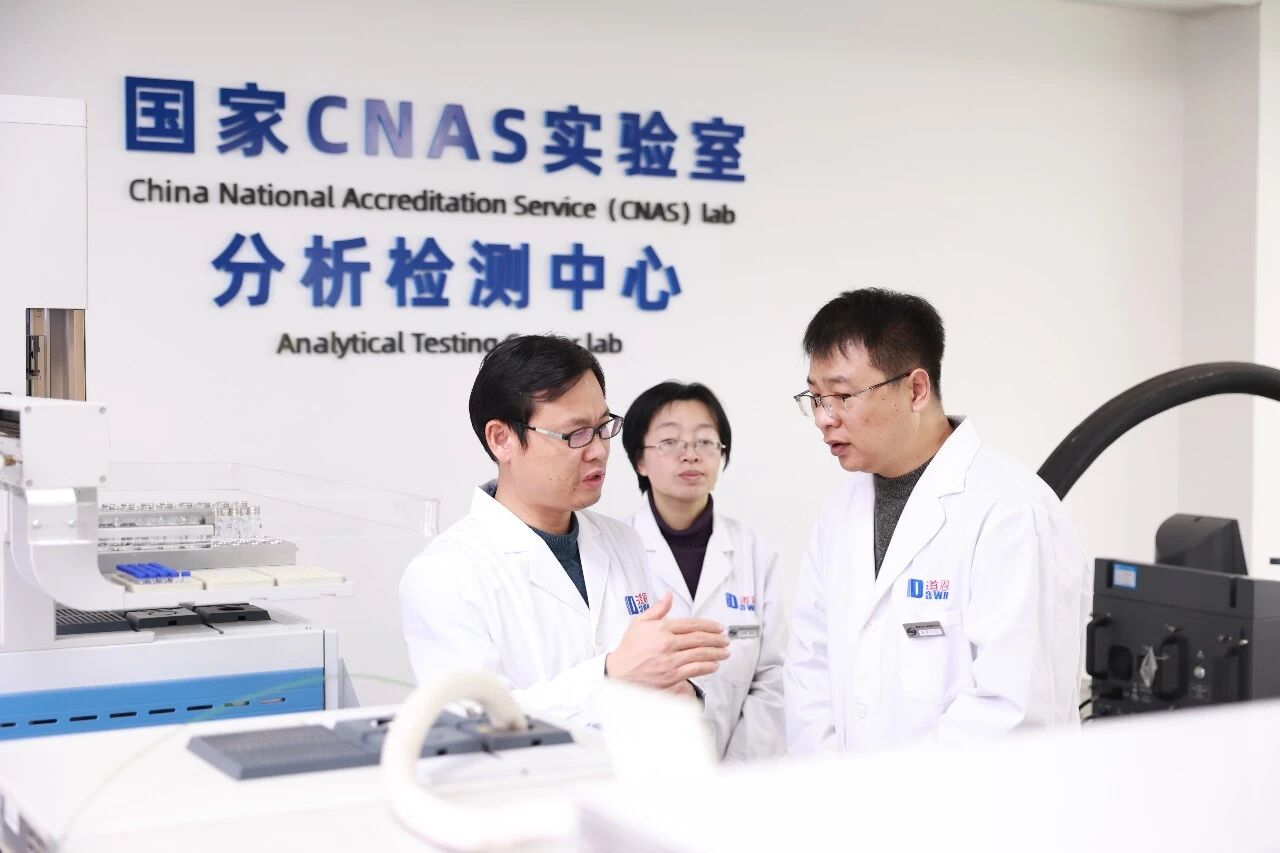
To date, this private enterprise has undertaken over 30 national and provincial-level projects and secured more than 460 national patents. It boasts a state-recognized enterprise technology center and a postdoctoral research workstation, attracting top-tier talent—including an academician of the Chinese Academy of Engineering and experts receiving special government allowances from the State Council—along with a research team comprising over 300 personnel holding master's degrees or higher. The company has established itself as a leading player with significant competitive advantages in the global polymer materials industry.
So, why has a private enterprise in a small coastal city been able to attract so much high-level talent?
Tian Hongchi: "I came here from out of town, yet I’ve managed to put down roots and stay in this small city for over twenty years—all because the environment here is so conducive to talent. If you look at our local policies, there are three-year subsidy programs for bachelor’s, master’s, and doctoral graduates who come to work here. They receive monthly financial support during this period—for instance, 5,000 yuan a month for master’s degree holders and 7,000 yuan for PhDs—plus housing allowances."
Tian Hongchi, a native of Fujian, arrived in Longkou over two decades ago after earning his doctorate in Materials Science from Beijing University of Chemical Technology; today, he is a leading national talent in science and technology and a key figure in the company's R&D and management.
Tian Hongchi: "The local environment for talent is excellent. We frequently hold forums to address specific needs and handle a lot of practical matters—such as arranging health check-ups or making accommodations for visiting family members. It creates an atmosphere that makes you eager to attract others to come here and start a business alongside you."
Reporter: "Did you also bring in colleagues you know?"
Tian Hongchi: "Many of my junior fellow students from Beijing University of Chemical Technology are now working here."
In recent years, Longkou City has implemented the "Helping Talent to be Successful" initiative, offering preferential policies covering salary and living allowances, housing support, assistance for entrepreneurship and scientific research, and provisions for children's schooling and employment. These efforts have attracted 8,500 high-level professionals to the area, bringing the total talent pool to 185,000. The city's approach to talent recruitment has also been recognized as a national model of innovation in talent management.